
What is Hernia in Women?
What is Hernia and How Does It Affect Women?
A hernia is a disorder that develops when an organ or piece of tissue pushes through a tear or weak area in the surrounding muscle or tissue. This may occur in the abdomen, groin, or diaphragm, among other body regions. Hernias can appear unexpectedly or develop gradually over time.
According to Hernia Treatment Hospital in Navi Mumbai, women can get hernias, however, they do so less commonly than men do. The following are some typical hernias that might affect women:
Common Types of Hernia in Women
- Inguinal Hernias: More frequently seen in men, these hernias develop in the groin region. Yet women can also get inguinal hernias, especially if they have a history of hard lifting or many pregnancies.
- Umbilical Hernias: These hernias are more frequent in women than in males, particularly in those who have had several pregnancies or who are obese. They develop close to the belly button.
- Incisional Hernias: Hernias at the site of previous abdominal surgery, known as “incisional hernias,” might weaken the abdominal wall and increase the risk of hernias.
- Hiatal Hernias: When a portion of the stomach pushes through the diaphragm and into the chest cavity, a hernia occurs. As they age, women are more likely to develop hiatal hernias, which can be accompanied by reflux symptoms.
Also Read: DO I NEED SURGERY FOR HERNIA?
What are the Causes of Hernia in Women?
Hernias happen when a weak area in the surrounding muscle or tissue allows an internal organ or tissue to protrude through. Although hernias are typically associated with men, they can also affect women. Although the causes of hernias in women might vary, the following characteristics are frequently linked to an increased chance of getting one:
1. Childbirth During Pregnancy:
The stress on the abdominal muscles during these processes might weaken the abdominal wall, increasing the risk of a hernia.
2. Obesity:
Having a large waistline or being obese can place additional tension on the abdominal muscles and increase the risk of a hernia.
3. Heavy Lifting:
Frequently lifting weights or objects that are heavy might cause the abdominal muscles to get strained and cause a hernia.
4. Coughing or Sneezing Repeatedly:
Prolonged coughing or sneezing can impose stress on the abdominal muscles, causing them to deteriorate over time.
5. Past Operations:
According to a General Surgeon in Navi Mumbai, women who have had abdominal surgery in the past may be more susceptible to hernias.
6. Genetics:
Due to a family history of the illness, certain women may be predisposed genetically to have hernias.
What is Abdominal Wall Weakness in Women?
Despite being similarly linked, abdominal wall weakness in women is not the same as a hernia. When the muscles and tissues that make up the abdominal wall are weak or injured, it is easier for organs and other tissues to push through the weak spot and produce a hernia.
This condition is referred to as abdominal wall weakness. Although poor abdominal wall tissue can result in the development of a hernia, this is not always the case. But, if unchecked, abdominal wall weakness can eventually raise the chance of developing a hernia. Both disorders can cause pain, discomfort, or an abdominal bulge as symptoms.
What is Diastasis Recti?
The two parts of the rectus abdominis muscle, also referred to as the “six-pack” muscle, split along the Linea alba, the connective tissue that runs along the middle of the abdomen, in a condition known as diastasis recti. Pregnancy, excessive weight gain, or abdominal surgery are all risk factors for this separation. Diastasis Recti is not the same as hernia though it is possible to have both a hernia and diastasis recti, and in certain situations, both diseases may need to be treated surgically.
Conclusion
Women can develop hernias just as frequently as males. Femoral hernias, for example, maybe more common in women than in men because of the differences in their anatomical structures. Due to the stress imposed on the abdominal muscles during pregnancy and after childbirth, women may also be more susceptible to developing hernias.
Women should be aware of the symptoms and signs of a hernia, which include pain, discomfort, and an obvious bulge in the affected area. Early medical intervention can stop the hernia from getting worse and potentially leading to catastrophic problems.
Women’s hernias can be treated surgically or with supporting clothing or belts that can help control discomfort. In general, women can lower their risk of getting hernias and maintain their health and well-being by being aware of the risk factors and taking preventative actions.

Essential Health Screening After 40
People around the age 40 have highly demanding jobs, responsibilities of elderly parents and growing children or all of the above, and therefore it’s easy to ignore health aside, though unintentionally. But 40 is the time to evaluate your overall wellbeing, and to plan for the long-run. It is considered a milestone when the risk of many health conditions increases. It could be due to lifestyle habits, negligent of health due to busy schedules and responsibilities, stress factors or hereditary. With today’s advance technology, most of the health issues are detectable and curable if treated at the right time. And the only way to stay on top of it is adopting measures such as lifestyle enhancement and regular medical check-ups and follow-ups.
Health Issues after 40.
Health screenings are generally an essential aspect of preventative health for people of all ages but as we grow older, regular check-ups for various factors must be considered as a priority. Health Care Providers in a Multispecialty Hospital in Navi Mumbai has shared the conditions they often spot in patients of this age.
- Overactive bladder.
- Perimenopausal Symptoms.
- Kidney stones.
- Urinary tract and prostate infections.
- Food allergies.
- Osteoarthritis.
- High blood pressure.
- Erectile dysfunction.
- Skin cancer.
- Depression.
- Anxiety.
Health Screenings for Men of 40.
- Prostate checks.
Prostate cancer spreads slowly, and early detection usually lead to successful treatment. The two main screening exams for prostate cancer are:
- Prostate-specific antigen (PSA test).
- Digital rectal exam (DRE).
- Colonoscopy.
Colorectal cancer (CRC) accounts for a lot of death and disease all over the world and is especially on the rise in the West. According to experts in the matter, if a polyps/tumours found on colonoscopy is small then they are easily removable, and the disease is stopped at that moment. It is highly recommended to begin CRC screening at an earlier age especially if there is a family history of CRC.
- Cholesterol Check.
Cholesterol tests should be a standard part of annual health check-ups, since cholesterol is seen as a biomarker of potential disease.
- Blood Sugar Test.
Blood sugar testing, and monitoring for good health, is highly advisable as it is one of the risk factors for metabolic syndrome. Blood sugar testing alone can alarm the health care providers that there may be a problem in the person’s health.
- Electrocardiograms (ECG).
The ECG reads the electrical impulses of the heart, and many cardiac abnormalities can be detected from these tests.
- Bone density tests.
Low bone density leading to hip fractures is a major medical problem. It is recommended that men with any of the above risk factors must consult their doctor for treatment and care.
- Dental check-ups.
Dental health is an important part of an adult’s overall health and wellness and being negligent towards it can pave the way for several other diseases.
- Eye Exams.
Eye exams can spot early signs of many chronic eye diseases, many of which do not have early symptoms.
Health Screenings for Women of 40.
1.Body mass index (BMI)/obesity screening.
Your weight and height are measured to calculate your BMI. The higher your BMI, the more chance you have of developing heart disease, high blood pressure, type 2 diabetes, certain cancers and other diseases.
2. Depression screening.
A test consisting of series of questions is administered to determine if you’re depressed or at risk for suicide.
3. Alcohol, smoking and substance misuse screening.
A test consisting of series of questions is administered to determine amounts and frequency of use.
4. Blood pressure check.
If you have history of blood pressure issues in your family, you should keep track of it by regular check. The goal is to have a blood pressure lower than 130/80 as an adult.
5. Cholesterol screening.
A cholesterol screening (also called a lipid panel) is a blood test that measures the amount of cholesterol and triglycerides in your blood.
6. Diabetes screening as part of a cardiovascular risk assessment.
It involves checking the glucose level in your blood while you are empty stomach. If your blood glucose level is too high, a retest is done to confirm a diabetes diagnosis.
7. Mammogram screening for breast cancer.
Women should begin mammogram tests (it’s an X-ray of the breast) at age 40 every year to stay on top of the matter.
8.Pap test screening for cervical cancer.
It is a test that looks for any abnormal cells on the cervix, as well as for HPV (human papillomavirus) infection.
9.Eye and dental exams.
You should have eye exams at least every two years if you’ve reached the age of 40. Schedule dental cleanings and exams every six months, and be diligent about following dental care regime.
10.Human immunodeficiency virus (HIV) screening.
HIV should be tested regardless of sexual activity, lifestyle, age or gender.
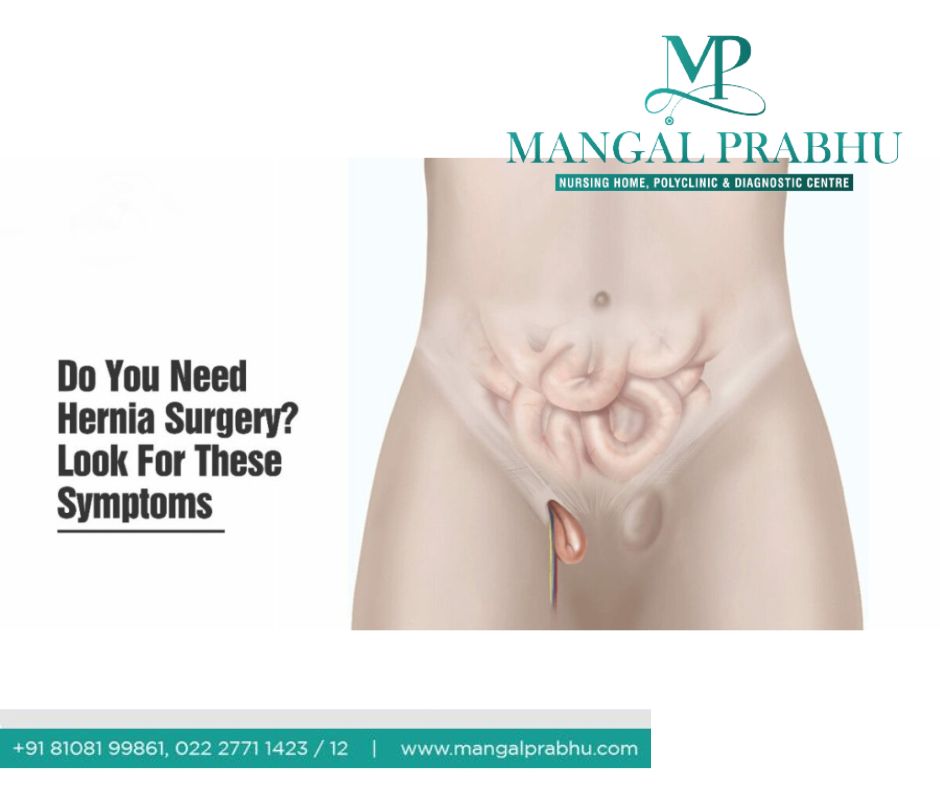
Do I Need Surgery for Hernia?
A hernia occurs when your muscles break down and the surrounding organs or tissues swell, forming a bulge. This bulge can be pushed back inward when pressed. Sadly, the hernia grows bigger and bigger and might require surgery to prevent complications.
However, not every type of hernia requires medical intervention. If you don’t notice any symptoms, you don’t need hernia treatment in Navi Mumbai. If you are considering surgery, the doctor will push the protruding organ back in its place and secure it with a mesh. The question is, “how do you know if you need surgery for a hernia?”
Hernia Surgery: Here’s When You Need It
A hernia doesn’t always require surgery, especially if it’s small and painless. But, if one of the following happens, medical intervention might be needed.
- Your organ or the tissue gets stuck in the abdominal wall, which might result in the complete cut of blood supply to the tissue.
- You have a strangulated hernia in which your organs do not get an adequate supply. If that happens, the organ might die immediately. This is a medical emergency, and surgical intervention is required. Visit your doctor immediately if you notice the hernia turning black or purple. Or if it’s accompanied by symptoms like fever and nausea.
- You experience extreme pain or any form of discomfort. Or the hernia grows larger.
Surgery is optional, or you don’t need it at least immediately if:
- You have a reducible hernia, which means it can be pushed back when you are lying down.
- It is almost invisible and doesn’t produce any symptoms.
Even if you don’t get surgery, follow-up appointments with your doctor are important if you are diagnosed with a hernia. You should at least have it checked every six months. Most adults and kids with hernia get an operation, though. It’s the most reliable way to ensure the hernia doesn’t cause any complications in the future.
Risks of Surgery
Hernia surgery is safe and is quite common among adults and kids. But like other operations, hernia surgery carries the risk of some complications, like:
- Infection in the treated area
- Blood clots (make sure you walk and keep your body moving to prevent blood clots after surgery)
- Some patients might develop chronic pain that lasts after surgery.
- Hernia might recur (putting mesh reduces the risk of the hernia returning by only half)
Alternative to Surgery
If you are too old to get surgery or are ill, you can talk to your doctor to discuss alternative treatments. Unfortunately, surgical treatment is the only option for an inguinal hernia. Some antibiotics might help reduce pain or push the bulge inward, but eventually, you might need to visit the surgery hospital in Navi Mumbai for permanent relief.
Your healthcare provider might recommend you wear a truss or a binder. These garments push the hernia back into its place by applying gentle pressure. These options come in handy when you can’t get a hernia surgery due to a preexisting medical condition or the risks of complications.