
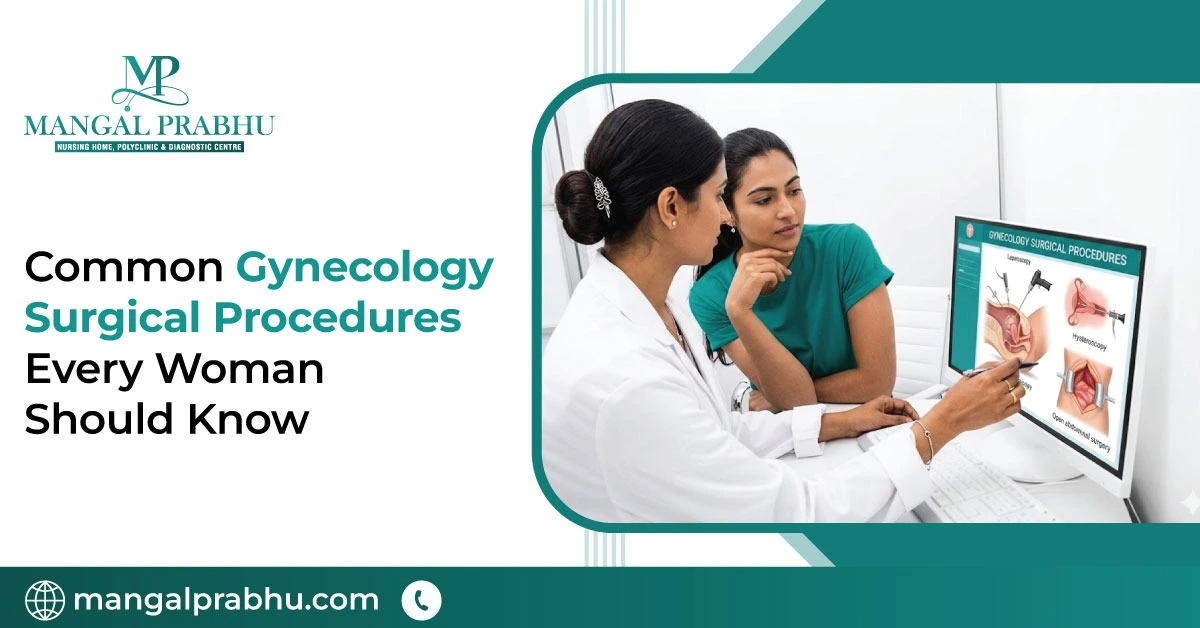
Common Gynecology Surgical Procedures Every Woman Should Know
At a gynecology hospital in Navi Mumbai, many patients who walk in with excruciating period pain, infertility, heavy bleeding, and other gynec issues are advised conservative treatments initially. That happens for most women with mild to moderate reproductive health issues that medications, and sometimes, lifestyle changes, can resolve.
However, for complex issues that won’t respond to medication, surgery is worth discussing. Here’s a look at some common gynecological procedures.
Most Common Gynecological Procedures
It’s natural to feel anxious when you hear the word “surgery”, but for many women, surgery means long-term relief from chronic pain, bleeding, and other issues that affect their personal and social life.
1. Hysterectomy
One of the most widely performed gynecological surgeries today is hysterectomy—the surgical removal of a woman’s uterus. The procedure can also involve the removal of the cervix, fallopian tubes, and ovaries.
It’s recommended for women with large, symptomatic fibroids, heavy or prolonged bleeding for many months, endometriosis, adenomyosis, or gynecological cancers.
2. Myomectomy
Fibroids are benign growths in a woman’s uterus. Depending on their size and location, fibroids can be problematic. A few common symptoms you might experience include heavy bleeding, pelvic pain, pelvic pressure, and sometimes, difficulty getting pregnant.
Myomectomy eliminates these growths through a laparoscopy, hysteroscopy, or open surgery. The uterus remains intact during a myomectomy, thus preserving your fertility.
3. Dilation & Curettage
A short, outpatient procedure, D&C involves dilating the cervix using specialized instruments and suctioning or scraping the uterine lining.
D&C is mostly performed to remove the remaining pregnancy tissue in the uterine lining, but can also be needed to extract sample tissue from the uterus for biopsy or to determine the reasons for abnormal uterine bleeding.
4. C-Section
Cesarean or a C-section birth is a surgery to deliver a baby via the abdomen. Many women with uncomplicated pregnancies deliver vaginally. However, a few may need to undergo a C-section due to pre-existing medical issues or pregnancy-related complications. It’s also performed as an emergency procedure when complications arise during labor. The surgery involves a horizontal or vertical incision near or at the bikini line and the uterus.
5. Tubal Ligation
Tubal ligation is the surgery to get your fallopian tubes cut, clipped, sealed, or removed to prevent future pregnancies. Women choose it when they are certain they do not want children. Once the tubes are cut or sealed, the eggs cannot travel down the tubes. This prevents pregnancy.
6. Hysteroscopy
Used as both a diagnostic and operative procedure, hysteroscopy is a less-invasive gynecological procedure, in which a thin tube with a camera at the tip is inserted into the uterine cavity through the vagina.
The pictures from the inside are generated on the video monitor, allowing a gynecologist in Navi Mumbai to investigate the cause of heavy uterine bleeding, pelvic pain, infertility, and other gynecological concerns.
While gynecological surgeries might sound daunting, modern, minimally invasive surgical approaches, some of which avoid incisions altogether, are considered safer, less complex, and smoother compared to traditional open surgeries.
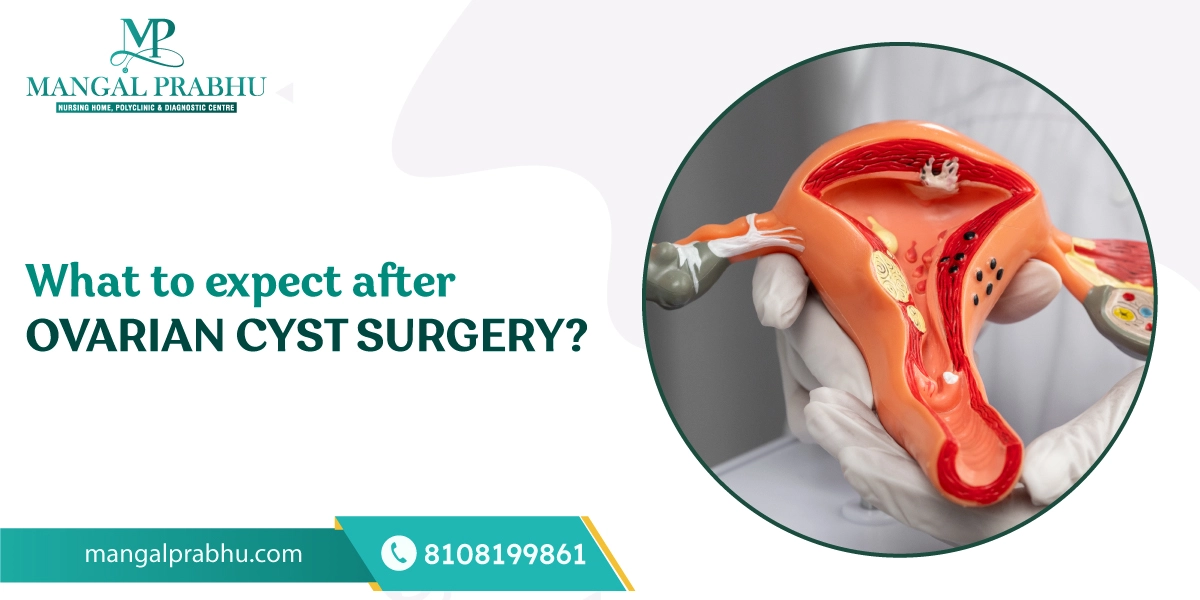
What to Expect After Ovarian Cyst Surgery
Ovarian cystectomy is a surgical removal of the fluid-filled pouches that form on or in the ovaries. While small cysts are common, larger ones (above 7 cm) might require surgical removal. A gynecologist in Navi Mumbai will explain what to expect after ovarian cyst surgery. If you are wondering what recovery after cystectomy is like, this post is for you.
Immediately After Surgery
Since cystectomy is a major surgery, you may need to spend a night or two in the hospital for monitoring. How long you stay in the hospital also depends on whether you have had an open surgery or laparoscopic cystectomy.
Your surgeon will watch your urine output, stools, blood pressure, and other vitals. Pain and bloating are normal after cystectomy. You will be given pain-relief medication to minimize discomfort. The surgeon closes the incision with staples, stitches, or glue. You may need to have them removed if they are not dissolvable.
How Soon Can You Recover Fully After Cystectomy?
Your recovery after the surgery depends on the type of procedure, your age, health, and lifestyle. In the first week after surgery, you are advised to take short walks to improve circulation and prevent constipation and blood clots.
Pain usually subsides by the third or fourth week. You can resume light activities, but don’t indulge in heavy lifting or other strenuous exercises yet or until your doctor gives you the go-ahead. Complete recovery may take 6 weeks in open surgery and around 4 weeks if you’ve had a laparoscopic removal of the cyst.
Tips for Faster Recovery
Before you get a discharge from the gynecological surgery hospital in Navi Mumbai, the surgeon will explain recovery instructions. Here’s what’s advised for most patients:
- Do not take a shower, sit in bathtubs, or practice swimming without asking your doctor first.
- Keep the incision site clean and dry.
- Sexual intercourse is not advisable until 4-6 weeks after surgery. Remember, your body has not healed internally yet. So, any activity that can strain the surgical site should be avoided.
- Eat foods rich in fiber for normal bowel movements.
- Drink plenty of fluids.
- Use a pillow or other lightweight items for support when coughing or sneezing.
- Rest as much as your body needs, but do not stay in bed all day. Light movements can help with recovery.
- Take your pain-relief medication and antibiotics (if prescribed) following the recommended dosage.
- Arrange for a drive home after surgery.
- Ask a friend or a close one to help you with household chores for the first week.
Warning Signs after Ovarian Cyst Surgery
Seek immediate medical support if you notice any warning signs.
- Fever exceeding 100.4°F
- Pain around the incision that doesn’t improve with medication
- Swelling or discharge from the incision
- Chest tightness and pain
- Heavy bleeding
Ovarian sacs are fairly common, especially in women of reproductive age. You may not even know you have them until they are detected in ultrasounds or other routine pelvic tests.
Some cysts, however, might grow large enough to cause pain and discomfort. Although less common, the cysts can become cancerous, requiring surgery. Follow the above tips to ensure a faster recovery after cystectomy.