
Is Dialysis Dangerous?
When your kidneys are not functioning optimally, waste substances (such as creatinine, urea, and acids) accumulate in your bloodstream. A nephrologist in Navi Mumbai recommends dialysis if your kidneys are failing. For those who are just starting dialysis, the treatment might sound intimidating at first. You may have many questions, such as “Is dialysis dangerous?” Let’s find out.
What is Dialysis and When is it Needed
In a healthy adult, the kidneys filter blood to create urine, which removes excess fluid and waste from the body. Dialysis mimics the function of your kidneys, removing waste from your blood and balancing fluid and mineral levels. It’s recommended for people diagnosed with end-stage kidney disease or kidney failure. If your kidneys are working less than 15%, dialysis can be used as a temporary option to filter your blood until you are ready for a kidney transplant.
Types of Dialysis
Depending on your comfort, you can choose from:
- Hemodialysis
- Peritoneal dialysis
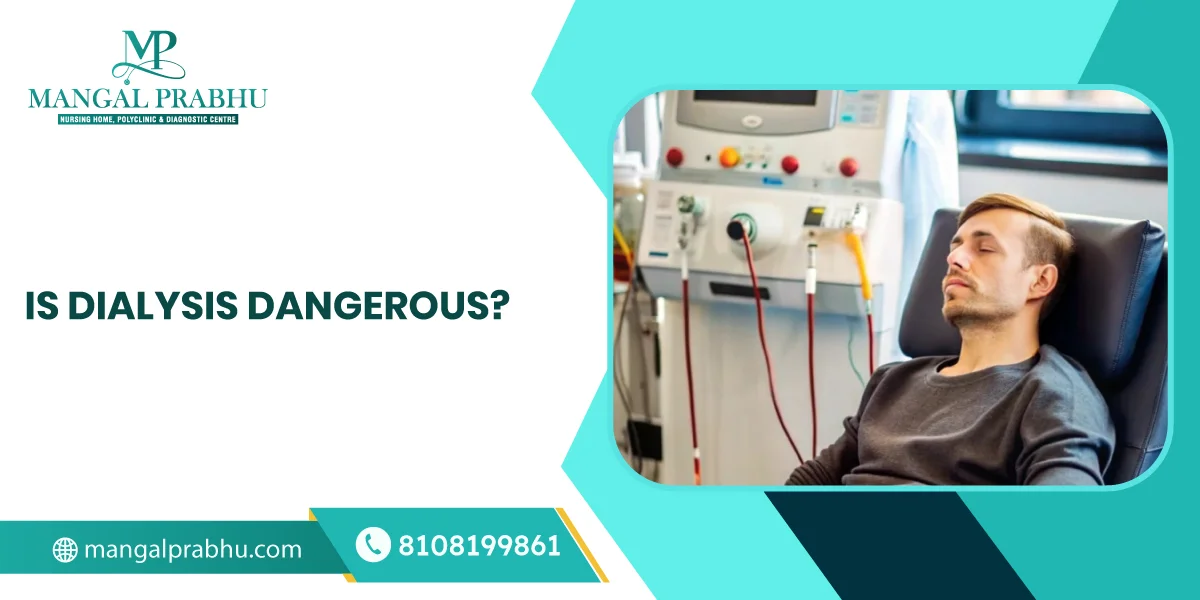
Hemodialysis is done at a dialysis center in Navi Mumbai. A nephrologist creates an access point in your arm through which the blood can be drawn out and returned to your body after filtering. The blood enters the dialyzer (a machine that does the filtering). It has two sides, with a thin membrane separating them.
The other side of the dialyzer has special fluid that extracts waste from your blood. The filtered blood moves back into your body. The process repeats for several hours (around 3-4) until a good portion of your blood is cleaned. You need multiple sessions of hemodialysis every week.
Peritoneal dialysis uses your peritoneum as the filter. The doctor places a tube inside your abdomen and passes dialysate solution through it. The excess waste and fluid from your blood pass through the peritoneum and enter the dialysate solution, which is then emptied into a bag. Fresh dialysate solution is again introduced in the next session. The cycle repeats 3-5 times a day.
Is Dialysis Dangerous?
Dialysis itself is not dangerous. In fact, it’s a life-saving treatment for people whose kidneys can’t filter blood normally. Not getting dialysis treatment can be dangerous, as toxins and extra fluid will keep building up in your blood.
Dialysis comes with certain risks, most of which are manageable. Many people feel tired, weak, or a little dizzy after a dialysis session. Mild cramping is also common due to the sudden electrolyte shifts.
More concerning risks of dialysis are infection at the access site (where catheters or grafts are used). With peritoneal dialysis, there’s a risk of peritonitis (inflammation of the peritoneum) and hernia. You must work with a professional nephrologist to minimize the risk of these complications.
How Long Do You Need to be on Dialysis?
Without a transplant, you may need dialysis forever. Note that dialysis cannot cure kidney diseases. It functions as a temporary filter, keeping your blood clean and free from toxins. You may eventually need a kidney transplant to live a normal, healthy life. Your dialysis will stop as soon as your new kidney (transplanted) starts working.