
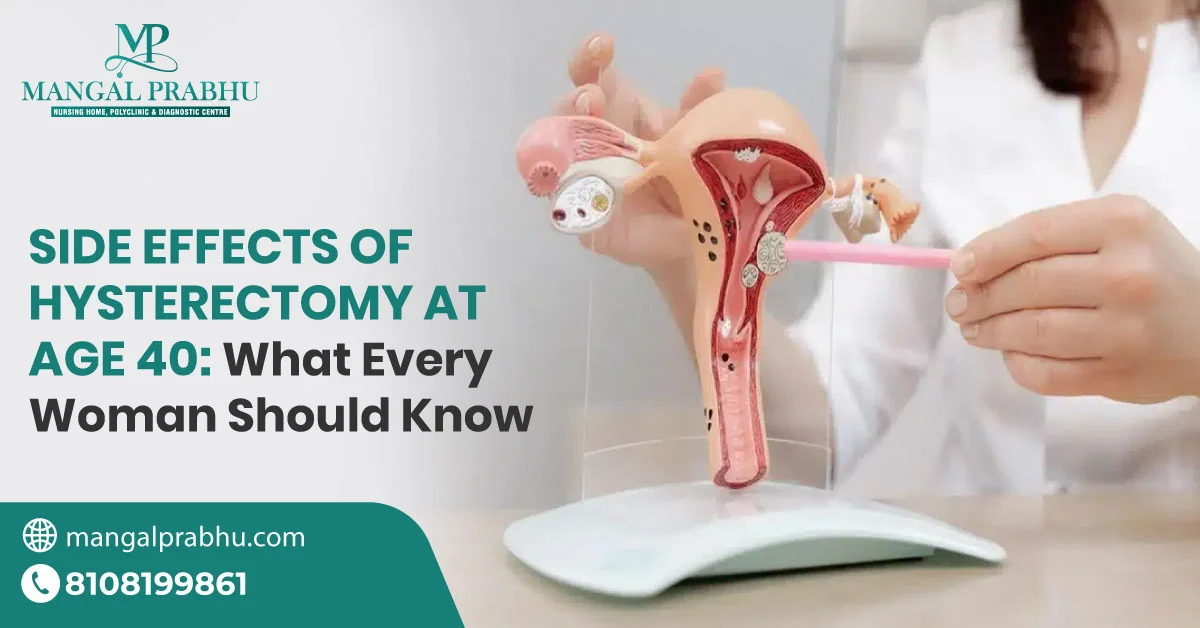
Undergoing hysterectomy surgery in Navi Mumbai in your 40s isn’t something you may have anticipated. However, this age brings many changes in your physical and emotional health, and sometimes, tough medical decisions.
For many women, a hysterectomy is not a choice. It’s a life-saving treatment that seems like the only solution to chronic pelvic pain, fibroids, heavy and prolonged bleeding, or other uterine issues that won’t respond to medication. The real question is, what happens after having a hysterectomy at 40? Does it come with side effects?
Hysterectomy: The Procedure and Types
Hysterectomy, in simple words, is the surgery to remove your uterus or womb — the organ where a baby grows during pregnancy. Now, the uterus may not be the only reproductive organ removed during the procedure.
Depending on the underlying medical issue or your current diagnosis, a gynecologist in Navi Mumbai may remove the uterus with cervix and, in some cases, ovaries. The changes in your overall hormonal and physical health after a hysterectomy depend on the type of surgery.
If only the uterus and cervix are removed (total hysterectomy), your hormonal function will be largely preserved, but your periods will stop permanently, and you won’t be able to get pregnant.
If ovaries are also removed (oophorectomy), you will enter menopause immediately, even if you are just 40. That will trigger menopause symptoms, such as hot flashes, mood swings, sleep disturbances, and long-term effects on your bone health.
Common Side Effects of Hysterectomy at 40
Here are the common side effects linked to a hysterectomy.
1. Early Menopause
Many women who undergo a hysterectomy also have their ovaries removed. Your ovaries produce estrogen. With ovaries removed, the estrogen level drops rapidly. The sudden drop triggers early menopause, which in turn triggers menopausal symptoms, which are much more intense than natural menopause.
2. Hormonal Changes
Even with your ovaries intact, they may not function the same as before. With the surrounding support structure removed, your ovarian function may be slightly reduced. Your periods may stop, but hormones might fluctuate. Menopause may arrive earlier with a hysterectomy, but not immediately. So, there still will be a gradual transition.
3. Emotional Changes
Hysterectomy doesn’t just bring physical changes, but can also affect your emotional health. While the surgery may offer relief from chronic pain or bleeding, making your life smoother, women also feel a sense of loss. That’s especially true in women who are still of reproductive age. At 40, a hysterectomy can stir feelings of anxiety, sadness, and emotional shifts that can affect your mental health silently.
4. Changes in Sexual Life
Many women report an improved sexual life after a hysterectomy, especially if they experienced pain during sex earlier. That said, many experience reduced libido due to hormonal changes and vaginal dryness.
Hysterectomy at the age of 40 may seem overwhelming, but it’s a safe and life-saving treatment. Rest assured that with the right guidance and proper treatment, you can live a healthy and fulfilling life after a hysterectomy.