
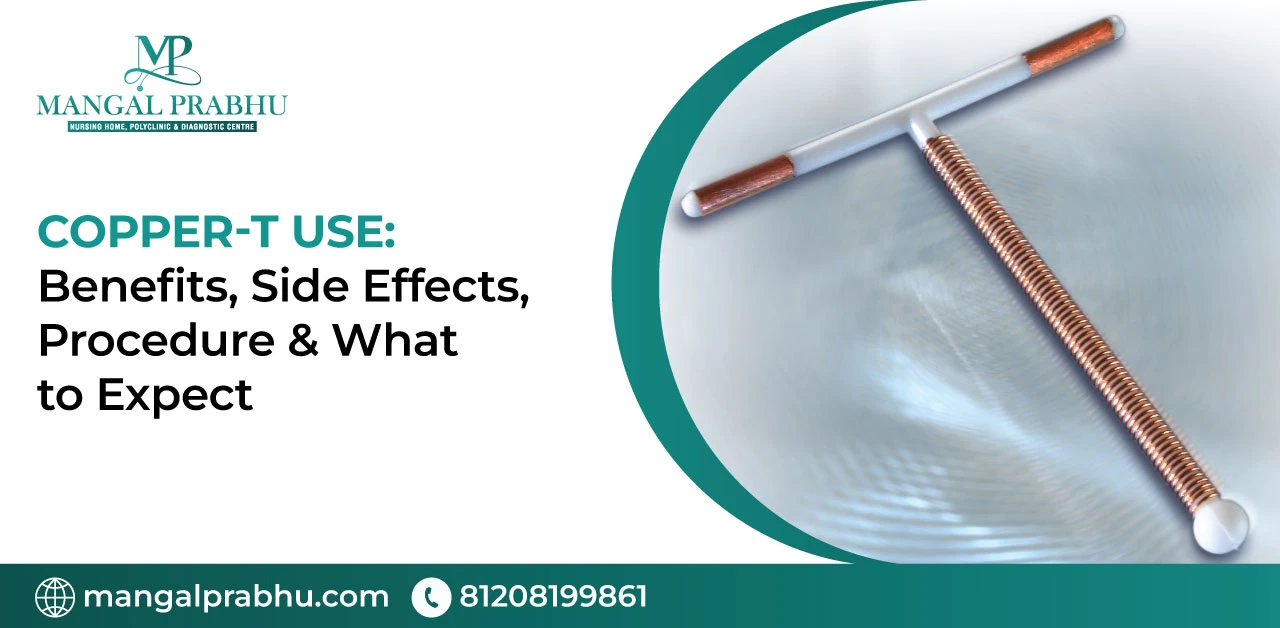
Copper-T is a hard plastic gynecological device that’s inserted into the uterus to prevent pregnancy. It may last up to 10 years and serves as a practical alternative to hormonal supplements, contraceptive pills, and other birth control methods.
Copper-T Use: Benefits, Side Effects, Procedure & What to Expect
If you are looking for a long-lasting birth control method, Copper-T or a Copper Intrauterine Device can be an effective option. It’s a T-shaped device, inserted into the uterus by a qualified gynecologist in Navi Mumbai.
It is used to prevent pregnancy, especially in women who do not want to take a pill every day or be on hormonal supplements. These are designed to last for up to 10 years. However, it comes with a few side-effects you must be aware of before using it.
Copper T: What Is It?
There are two types of Intrauterine Devices: Hormonal IUDs, which, as the name suggests, release progestin, a hormone that thickens cervical mucus, thins the uterine lining, and prevents ovulation. Copper IUDs, on the other hand, do not release any hormone, but release copper, which creates an environment unsuitable for pregnancy to occur and thrive.
Unlike a more permanent form of birth control, such as tubal ligation, this method is less invasive and reversible. If you plan to become pregnant, you can have it removed and start trying. Alternatively, many women decide to remove Copper-T when they want to switch to another birth control method.
How Does Copper-T Work?
The biggest benefit of Copper-T is that it doesn’t impact your ovulatory cycles or hormonal balance. Your ovaries continue to release an egg. Our bodies contain a small amount of copper, but both too little and too much production are linked to impaired sperm movement.
These are also known to damage the sperm’s outer membranes. That said, Copper-T cannot prevent sexually transmitted infections (STIs). You may have to continue to use protection to prevent STIs.
Does Copper-T Have Any Side-Effects?
In the long run, Copper-T is considered safe to use. However, a few women experience cramping and a little heavier bleeding for the first few months after insertion. Common side-effects include:
Heavier Periods
It’s normal to experience some changes in your menstrual cycle for the first 3-6 months, such as heavier periods, prolonged bleeding, or sometimes passing blood clots.
These changes are usually temporary, but some women may continue to experience them until the device is removed. Any extremely heavy bleeding with severe menstrual cramps and dizziness should be reported straight to a gynecologist at a maternity hospital in Navi Mumbai.
Menstrual Cramps
Some women complain about painful periods in the first few menstrual cycles after Copper-T insertion. Again, it’s a temporary side effect, and the pain must ease up within a few months.
Spotting Between Periods
You may notice light bleeding or spotting between your periods. This can be brown or reddish blood. Any heavy bleeding, however, should be reported to a gynecologist.
Copper-T Expulsion
It’s possible that your uterus may push the Copper-T, either part of it or the entire device, out within the first few weeks of insertion. If you notice any hard plastic coming out, see a gynecologist immediately.