
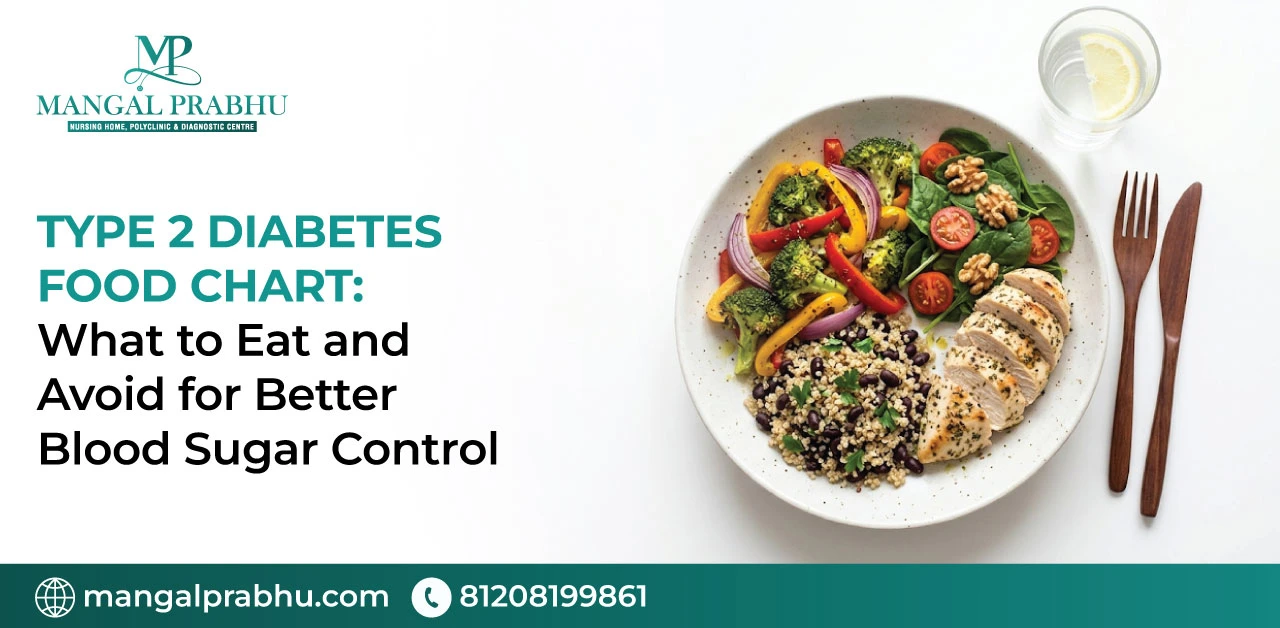
Watching your portion sizes, the food you eat, when you eat, and what you combine it with are key steps in keeping your blood sugar levels under control.
Type 2 Diabetes Food Chart: What to Eat and Avoid for Better Blood Sugar Control
Ask any general physician in Navi Mumbai, and they will tell you that having type 2 diabetes doesn’t mean you need to give up on your favorite foods. You just need to watch portion sizes, the type of food you eat, when you eat, and your overall dietary habits.
This is why it’s worth getting a diabetes diet chart, which lists the foods you can eat or avoid. In this post, we have covered a detailed Indian diet plan that can help keep your blood sugar levels under control.
Foods to Avoid
There’s no specific food that can cause severe damage, but certain food choices can have a negative impact on your blood sugar levels, especially when consumed regularly, in large amounts, and when paired with the wrong foods. Here’s what to avoid:
- Sugary foods and desserts
- Fruit juices and other sweet beverages
- Refined carbs
- Deep-fried and processed foods
- Foods rich in saturated fats
Foods to Include
Here’s a list of the simplest and healthiest Indian foods that you must add to your diabetic diet chart.
Whole Grains
Whole grains are a good source of fiber, which helps keep you full for longer and slows digestion.
The best options in whole grains are whole wheat, barley, brown rice, millets, and oats. White rice is also safe to eat, as long as you control portions and serve it with vegetables, salad, dal, or other protein-rich food.
Green Leafy Vegetables
The best food you can include in your diabetes-friendly diet is a variety of vegetables, preferably non-starchy and green leafy ones. Low in calories and rich in vitamins and minerals, a vegetable serving a day can do wonders for your health.
You can have Spinach (palak), Fenugreek leaves (methi), Bottle gourd (lauki), Bitter gourd (karela), Cucumber, Broccoli, Cauliflower, Cabbage, Ladyfinger (bhindi), French beans, Capsicum, and Radish.
Protein
Protein is a must for your muscle mass and to keep you full for longer. It’s also worth adding when you are eating carb-rich foods. Some great sources of protein include Moong dal, Masoor dal, Chana, Rajma, Chickpeas, Tofu, Paneer, Unsweetened Greek yoghurt, and Soybeans. If you like non-veg, you can have eggs, skinless chicken, fish, and lean meat.
Whole Fruits
You don’t have to avoid all fruits altogether. You can eat them, but in moderate portions, and the right ones. They are a rich source of vitamins, minerals, and antioxidants, which help boost your immunity and can be a great snacking option.
You can have Apples, Guava, Orange, Pear, Papaya, Kiwi, Berries, Pomegranate, and Peaches. Be mindful of the portion sizes if you are having ripe mangoes, grapes, chikoo, and bananas.
Healthy Fats
At a multi-specialty hospital in Navi Mumbai, a physician won’t ask you to stop eating fats, but to replace unhealthy fats with healthy choices that can keep your heart healthy while supporting vitamin absorption.
Choosing healthy fats is important, as people with diabetes are at an increased risk of developing cardiovascular diseases. Take Almonds, Walnuts, Pistachios, Chia seeds, Flaxseeds, Pumpkin seeds, Sunflower seeds, and Peanuts in moderate amounts.