
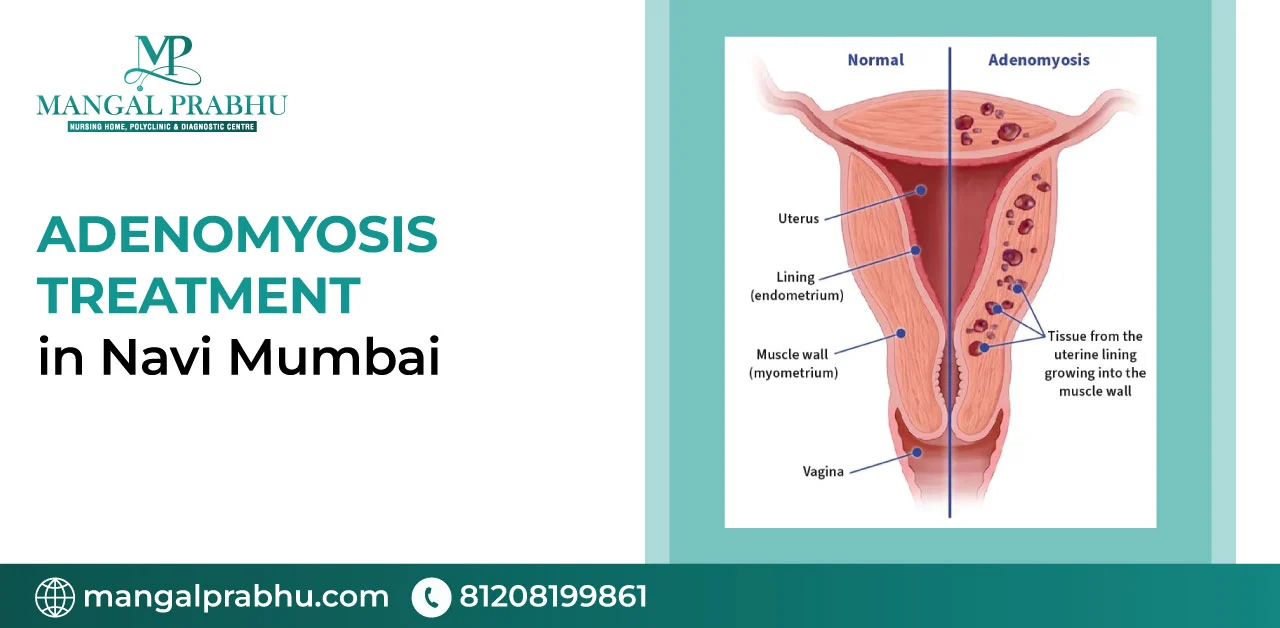
Adenomyosis is a gynecological condition in which tissue similar to the endometrial tissue starts growing in the muscular wall of your uterus. This can cause heavy bleeding during periods, pelvic pain that may persist beyond periods, or pelvic pressure and discomfort.
Although more common in women in their 30s and 40s, anyone can develop adenomyosis, including younger women. Living with adenomyosis can be extremely challenging due to intense pain and heavy periods. Fortunately, adenomyosis treatment in Navi Mumbai is often effective in relieving symptoms.
When Does Adenomyosis Require Treatment?
You may not need treatment at all if it’s asymptomatic. If your periods are regular or you have no fertility concerns, and it’s found accidentally during a routine pelvic exam, your gynecologist might monitor it initially.
Treatment is needed when symptoms are present or are severe enough to interfere with your work and social life. Symptoms of adenomyosis can overlap with those of uterine fibroids, polyps, and endometriosis. So, before starting treatment, your doctor will closely look at your ultrasound reports to rule out other possible causes of heavy bleeding or pelvic pain.
Treatment for Adenomyosis in Navi Mumbai
There’s no single treatment that can work for every woman diagnosed with adenomyosis. A gynecologist in Navi Mumbai may evaluate your health, consider your age, and ask about your fertility goals to recommend the most appropriate treatment. Here’s what may help:
1. Pain-Relief Medicines
The biggest concern in women with adenomyosis is pelvic cramps. Uterine contractions can be difficult to manage, especially during periods. Paracetamol or ibuprofen might work for mild pain.
2. Hormonal Treatments
If you experience heavy bleeding with severe cramps, hormonal treatment can be a reasonable option. They work by reducing hormonal stimulation, thus controlling inflammation and bleeding during the menstrual cycle.
Different hormonal treatments work in different ways.
3. IUD: The hormonal intrauterine device involves inserting a device that releases synthetic progestin into the uterus. It keeps delivering hormone to thin out the uterine lining and prevent severe menstrual bleeding and associated pain.
4. Birth Control Pills: Combined contraceptive pills containing both estrogen and progestin are not just used to prevent pregnancy, but they can also manage adenomyosis symptoms. The tablets can regulate your menstrual cycles, making periods lighter, less frequent, and, in selected patients, stopping them temporarily.
5. Medicines for Heavy Bleeding
Adenomyosis can cause excessive bleeding, which, when left untreated, can cause iron deficiency and anemia. If significant bleeding affects your everyday activities or makes you tired, weak, dizzy, or breathless, medicines to control heavy bleeding could be an effective treatment option.
6. Surgery to Remove Adenomyosis Tissue
If you wish to preserve your fertility, a surgical removal of the adenomyosis tissue may be a reasonable treatment. The surgery is helpful when this abnormal tissue can be located and excised safely without damaging healthy uterine tissue.
7. Hysterectomy
The only permanent cure for adenomyosis is hysterectomy, the uterus removal surgery. Since the tissue develops within the muscular wall of the uterus, removing the uterus will remove the root cause of the menstrual cramps, pain, and pelvic discomfort.