
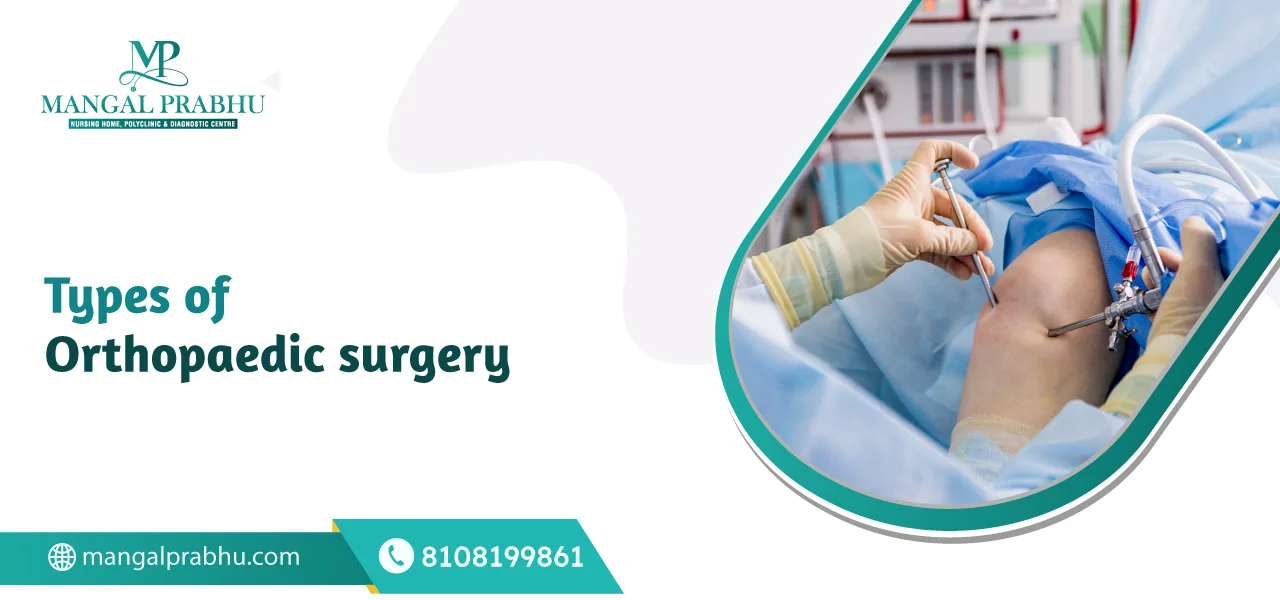
Treatments for conditions affecting your musculoskeletal system fall into the orthopedic surgery category. It involves your muscles, tendons, ligaments, joints, bones, nerves, and other interconnected structures. This branch of surgery helps people achieve stability, improved mobility, and a pain-free life. If you ever wonder about the types of procedures carried out in an orthopedic hospital in Navi Mumbai, this post is for you.
Common Types of Orthopedic Surgery
1. ACL Reconstruction
Do you hear a “pop” sound after sustaining a knee injury? Does your knee feel unstable? You might have suffered an Anterior Cruciate Ligament (ACL) injury. A torn ACL can make jumping, running, and even walking difficult. It requires surgical reconstruction, in which the ACL is replaced with a tissue graft.
2. Hip Replacement Surgery
Hip replacement is another orthopedic surgery that involves replacing the hip joint (ball or socket, or both). It’s recommended for patients with reduced mobility, debilitating hip pain, and difficulty performing routine tasks.
If you have rheumatoid arthritis, osteoarthritis, a hip fracture, or other medical issues with your hip joint that affect your joint stability, a hip replacement surgery can be an effective decision.
3. Knee Replacement Surgery
For severe arthritis that has limited your movements, either partially or entirely, knee replacement surgery can offer significant relief. With age, the cartilage that cushions your knee joints wears out, causing intense pain as your bones rub against each other with movement.
Knee replacement removes the damaged knee joint and replaces it with an artificial implant that improves mobility, reduces pain, and makes your knees feel more stable.
4. Knee Arthroscopy
An orthopedic surgeon in Navi Mumbai might recommend this minimally invasive surgical procedure for patients with a torn ACL, meniscal tears, and other minor knee joint issues.
In a knee arthroscopy, an arthroscope (a narrow device with a camera on one end) is inserted into your knee joint through a buttonhole-sized incision. The detailed picture of the inside of the knee is produced on a high-definition video monitor. It’s used for both diagnosis and treatment of joint issues.
5. Spinal Surgery
A spinal surgery is not usually recommended as the first line of treatment. However, if the consecutive treatments, such as rest, medication, and physiotherapy, do not help, surgery may be necessary. For spinal deformity, injuries or fractures that damage the spine, severe cases of slipped disc, infections, and spinal tumors, spinal surgery might be needed.
6. Shoulder Arthroscopy and Replacement
If your shoulder joints are not moving or functioning properly due to avascular necrosis, a shoulder fracture, rotator cuff tear, arthropathy, or osteoarthritis, a shoulder replacement surgery can be helpful. Your surgeon might first use shoulder arthroscopy to diagnose the extent of the damage. If necessary, they may replace the worn-out or dysfunctional shoulder joint with prosthetic implants.
7. Fracture Repair
For simple fractures, immobilizing the affected joint with splints or casts may be enough. For complex fractures, in which the broken bone pierces through the skin or is broken into several fragments, a more complex surgical approach may be used. The surgeon may use plates, screws, rods, pins, and other external fixators to keep the bone in place and offer stability as it heals.