
5 Types of Hysterectomy
Your uterus or womb is your baby’s home for nine months. That’s where the embryo gets all the nourishment it needs for growth until it’s ready to enter the world. Hysterectomy (uterus removal surgery) in Navi Mumbai can be a life-saving procedure for some women. For others, it’s advised to improve their quality of life.
Hysterectomy is the second-most common surgery among women after cesarean delivery. It often offers relief from heavy bleeding, prolonged and painful periods, endometriosis, uterine prolapse, and other reproductive issues. In this post, we’ll walk you through the five common types of hysterectomy and when they are advised.
1. Partial Hysterectomy
Although less common these days, some women might opt for a partial hysterectomy — a procedure that removes the uterus surgically, but keeps the cervix (the part that connects the uterus to the vagina) in place. Your gynecologist may recommend this option if your cervix appears healthy and normal.
However, with the cervix intact, you may need to take pap smears regularly. The advantage of a partial hysterectomy is that the recovery is slightly smoother and less drastic compared to a total hysterectomy.
2. Total Hysterectomy
This is the most common hysterectomy procedure. As the name suggests, your gynecologist removes the uterus with the cervix. A total hysterectomy can be performed using laparoscopic, robot-assisted, or open-cut procedures.
Your gynecologist in Navi Mumbai may recommend a total hysterectomy if you have fibroids, uncontrollable vaginal bleeding, endometriosis, or uterine cancer. After a uterus removal, your periods will stop, but you won’t enter menopause immediately unless the ovaries are also removed.
3. Radical Hysterectomy
Radical hysterectomy is the most complex form of hysterectomy and is usually reserved for patients with cervical cancer. The surgery removes the uterus, cervix, a part of the vagina, surrounding tissues, and in some cases, lymph nodes.
Since the surgery is considered quite major and may affect your bowel function due to the involvement of healthy surrounding tissues, it’s only performed when absolutely necessary. Your surgeon will most likely weigh the risks and benefits of a radical hysterectomy before recommending this procedure.
4. Hysterectomy with Oophorectomy
Hysterectomy can involve the removal of one or both ovaries. It’s recommended for women with ovarian cancer, pelvic inflammatory disease, or ovaries that look abnormal. Gene mutations, such as BRCA genes, that increase ovarian cancer risk can be the reason your gynecologist might advise you to get a hysterectomy with oophorectomy.
If both ovaries are removed, you’ll enter menopause immediately. The symptoms of menopause include hot flashes, night sweats, mood swings, and an increased risk of osteoporosis.
5. Hysterectomy with Salpingo-Oophorectomy
This surgical procedure removes your uterus with fallopian tubes and ovaries (one or both). The recovery can take 4-6 weeks or less if advanced surgical methods, such as laparoscopic or robotic, are followed. Sometimes, your surgeon may remove lymph nodes, tissues, part of the vagina, both tubes, and both ovaries, along with the uterus, for cancer treatment.
The most suitable procedure for your case depends on your age, health, and the reason for your hysterectomy. Consult a gynecologist to know your best treatment option.

Periods with PCOS: What Every Woman Should Know
Polycystic Ovarian Syndrome is a woman’s hormonal issue. Many don’t even know they have it until they try to become pregnant. Symptoms of PCOS can also vary between women. Some may gain weight and experience difficulty shedding the extra pounds, while others develop facial hair, acne, and suffer from hair loss.
A common issue that most women with PCOS face is irregular periods. A gynecologist in Navi Mumbai can offer personalized treatment for PCOS. Meanwhile, here’s all you should know about PCOS and how it affects your periods.
What Exactly Happens in PCOS?
The main reproductive hormones that a woman’s body produces are estrogen and progesterone. They also produce a small amount of male hormone, called androgen. In women with PCOS, the androgen level surges, causing strange symptoms, like facial hair growth and hair loss. This hormonal imbalance can affect your menstrual cycle. Your period might be late, too early, or absent for months.
This happens when your ovaries develop tiny fluid-filled sacs, called follicles. These contain your eggs. Normally, one of the ovaries releases a mature egg during ovulation. In PCOS, multiple follicles are produced, but they don’t mature. As a result, the eggs are not released.
How PCOS Affects Periods
You are diagnosed with PCOS when you have irregular periods, polycystic ovaries, or a high level of androgen.
Absent or Irregular Periods
A normal menstrual cycle is 28-35 days long. Bleeding lasts for 2-7 days. Many women with PCOS do not get their period for a month. This happens because of absent ovulation. When your ovaries do not release a mature egg, you may not ovulate. As a result, your uterine lining doesn’t shed. Your hormones might get out of control, leading to very few periods or absent periods.
Heavy Periods
Another common symptom of PCOS is heavy periods. This happens when the uterine lining becomes thicker over time due to a lack of ovulation and an irregular menstrual cycle. So, when your period does occur, the built-up lining sheds, causing heavy bleeding. Sometimes, the bleeding can last longer than 7 days. Some women also pass blood clots.
Painful Periods
In PCOS, women get periods after months. The thickened lining makes your uterus contract more than usual to shed the endometrial lining. This may result in pelvic inflammation and painful periods. Sometimes, ovarian cysts can become larger, causing pain in the back or lower abdomen. Severe menstrual cramps in PCOS can also suggest a co-existing medical issue, such as endometriosis.
Other Symptoms of PCOS
Apart from period irregularities, women with PCOS can have these:
Weight Gain: PCOS disrupts your metabolism, making it more challenging to lose weight. As a result, Women with PCOS develop excess weight, especially around the belly. Rapid weight gain in PCOS is also linked to insulin resistance.
Body Hair: High androgen levels lead to hirsutism, which causes unusual facial hair growth.
Acne: High androgen levels also increase sebum production, which makes your skin oily and prone to acne. Fortunately, PCOS treatment in Navi Mumbai offers hope to women who struggle with period issues, infertility, and other hormonal problems due to PCOS.

What is a 21-day Chemo Cycle?
Chemotherapy is a popular and highly effective treatment for cancer. It consists of a combination of drugs that are administered over several months to kill rapidly growing cancer cells. It’s combined with surgery, immunotherapy, radiation, and other medical procedures to improve the treatment’s success rate. At a chemotherapy center in Navi Mumbai, oncologists typically follow a 21-day chemo cycle. To know what it is and how it helps patients fight cancer, read on.
What is a 21-day Chemotherapy Cycle?
A chemotherapy cycle refers to the gap between the two cycles. Between these cycles, you will be allowed a period of rest, which allows your body to heal from the side effects of chemotherapy and recover before the next cycle begins.
For instance, if you have a 3-week (21-day) chemo cycle, the medication will be administered on days 1 and 8, with resting periods from day 2 to day 7 and from day 9 to day 21.
If it’s a 4-week-long cycle, the oncologist may start you on medication from day 1 to day 3, followed by a resting period from day 4 to day 28. That’s a standard treatment cycle for cancer patients. The doctor may tweak it depending on your individual case. For instance, the ideal chemo cycle length depends on your physical health, cancer type, how aggressive it is, and where it started.
Why are Chemotherapy Drugs Given in Cycles?
Chemotherapy consists of a combination of medicines that are selected based on years of research and clinical trials. The treatment is personalized for each patient. The goal is to kill aggressively spreading cancer cells without harming healthy tissues, which is why it’s often administered in cycles over weeks or months.
Chemotherapy is known for killing fast-growing cells in your body. So, in addition to the cancer cells, it can affect healthy cells, like those in your digestive tract. With the procedure divided into cycles, it’s easier for the doctor to kill cancer effectively while allowing brief periods of relief to the patient and the time needed for their normal cells to recover from the damage.
Tips for Recovery Between Chemotherapy Cycles
An oncologist will explain some lifestyle changes to cope with the chemotherapy’s side effects and ensure faster healing between each cycle. Meanwhile, you can follow these standard tips after a chemotherapy cycle:
- Get adequate sleep
- Rest as much as your body needs
- Eat smaller meals multiple times a day
- Have a balanced diet
- Stay hydrated
Adjusting the Cycles
As mentioned earlier, an oncologist in Navi Mumbai will customize the treatment based on your health and cancer type. They might adjust the cycles or the drug type, depending on how you cope with chemotherapy and how effective the treatment has proven so far.
For some patients, chemotherapy starts after surgery to destroy leftover cancer cells that may have broken away from the tumor site. It minimizes the risk of a cancer relapse.
In some patients, the procedure starts before your surgery to reduce the tumor size, making it removable via surgery. Chemotherapy continues after surgery to kill the remaining cells, especially if they have spread beyond the origin.

Is Chemo Only for Cancer?
What’s the first word that comes to your mind when you hear the word chemotherapy? Cancer. Chemotherapy is the most common treatment for different types and stages of cancer. Depending on the severity of the cancer, oncologists in Navi Mumbai perform chemotherapy either as a standalone treatment or in conjunction with surgery, radiation therapy, hormone therapy, and other procedures.
The question is, is chemotherapy only for cancer? No! It’s also used to treat certain autoimmune disorders and blood disorders. Let’s see what chemotherapy can treat.
Common Uses of Chemotherapy
For Cancer
More than a hundred types of chemotherapy drugs are used to treat different types of cancer. Cancer cells are known for multiplying rapidly. The initial stage of cancer is often confined to a specific organ, but it can spread to the surrounding tissues, lymph nodes, and organs if left untreated. Treatment gets harder as the cancer reaches an advanced stage.
Chemotherapy drugs kill the rapidly multiplying cancer cells. The goal of the treatment is to stop the cancer cells from growing or replicating. The number of chemotherapies required for each patient can vary depending on their cancer diagnosis and how far it’s spread.
For Non-Cancerous Diseases
Chemotherapy can be used in low doses or high doses for non-cancerous conditions, especially autoimmune disorders.
i) Autoimmune Disorders:
Lupus and other autoimmune disorders, in which your immune system attacks your organs and tissues, can be treated with chemotherapy. The therapy can suppress an overactive immune system.
ii) Bone Marrow Disorders:
Bone marrow diseases in which your bone marrow fails to produce adequate red blood cells might require chemotherapy combined with blood transfusion and bone marrow transplant. Chemotherapy is often performed before a bone marrow transplant to destroy the damaged bone marrow cells.
iii) Infections:
Some types of severe and persistent fungal infections can be treated with chemotherapy. Antifungal agents are used to offer relief to the patient. Viral infections that do not respond to the antiviral medication might also require chemotherapy, especially in patients with compromised immune systems.
Potential Side Effects of Chemotherapy
As mentioned earlier, chemotherapy kills cells that grow rapidly, which might also include the healthy cells in your gut and those responsible for your hair growth. So, side effects are not uncommon after each session. The severity of the side effects and how long they last depends on the chemo drugs you are given and the dosage. Here are possible side-effects of chemotherapy:
- Fatigue
- Hair loss
- Mouth sores
- Memory loss (also called chemo brain)
- Fertility issues
- Nausea and vomiting
- Loss of appetite
- Diarrhea or constipation
The side effects can vary from person to person. These are short-term issues that resolve on their own once the treatment stops and the new cells start to grow. Chemotherapy is also associated with long-term side effects, such as damage to your vital organs, like the heart, lungs, and reproductive system.
Conclusion
You can learn more about different types of chemotherapies and multiple methods used to administer the chemotherapy drugs into your body at the chemotherapy hospital in Navi Mumbai.
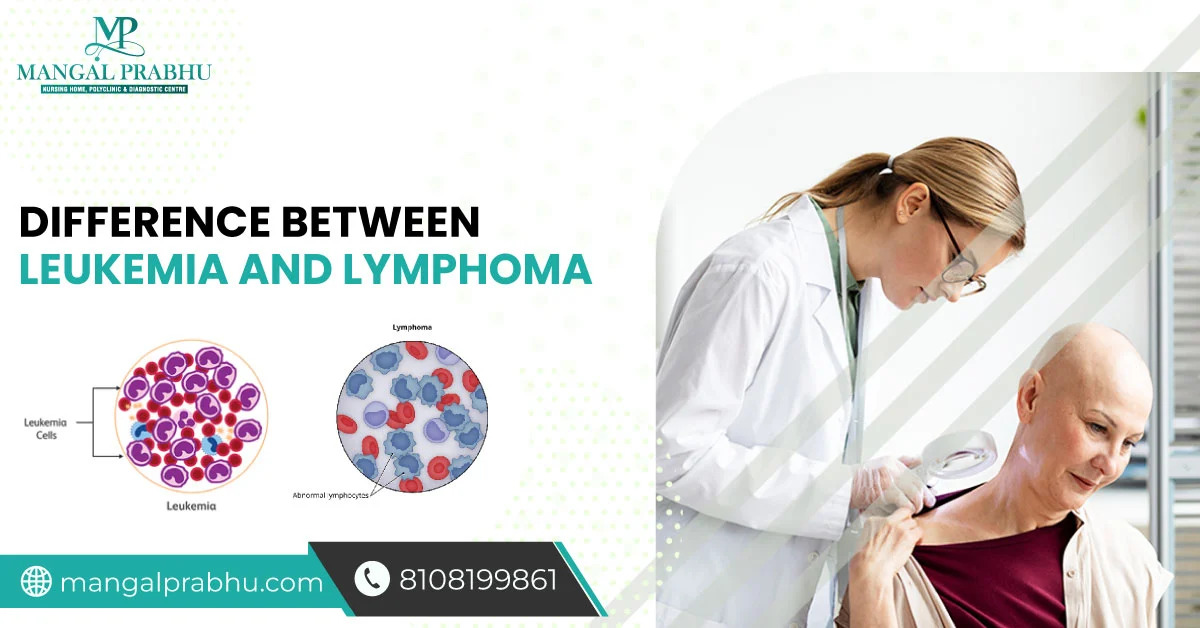
Difference Between Leukemia and Lymphoma
Cancers that involve the blood and bone marrow including leukemia and lymphoma. Despite their common origin in the cells that form blood, leukemia and lymphoma differ in various ways such as symptoms, diagnosis, and treatment options. By exploring these similarities and differences, this article will provide patients with knowledge about their specific kinds of blood cancer that can lead them to an appropriate Hematologist in Navi Mumbai.
Definition and Types
Leukemia commences in the bone marrow and causes an excessive growth of white blood cells known as leukocytes or leukemia cells. The primary distinctions lie in acute vs. chronic forms depending on which type of cells they affect: lymphocytes or myeloid cells.
Lymphoma occurs when there is proliferation of lymphocytes within the lymph nodes as well as other tissues that are found outside of bone marrow. The latter often presents with localized bands or sheets, while the former contains scattered cells among fibrous tissues or has a mixed cellularity pattern.
Causes and Risk Factors
People have still not known what causes both of these diseases before.Leukemia occurs when the genetic composition of the cells changes randomly while in Lymphoma, cases have been recorded where it was evident that certain infectious agents like Epstein Barr virus (EBV)and Human Immunodeficiency Virus(HIV)led to the disease.
Some individuals are more predisposed to these two infections due to age, and family lineage hence leading to a weaker body defence in fighting off infections as seen in these two illnesses.
Symptoms and Diagnosis
Fever, fatigue, bone/joint pain and frequent infections are the crucial symptoms of Leukemia. Other signs of Leukemia include an increase in malignant white cells in the blood because they destroy healthy cells inside their crowded zone.
Enlarged lymph nodes, weight loss, night sweats etc. are likely to be signs of Lymphoma depending on which part of the lymphatic system is under attack. Blood tests plus bone marrow biopsy, as well as several scans for an accurate diagnosis on the specific type of disease. Such tests can be administered by a Hematologist in Navi Mumbai.
Treatment Options
For each of the conditions above, treatment may include chemotherapy, immunotherapy, targeted therapy, radiotherapy or stem cell transplant depending on the cancer type and stage.
Leukemia/lymphoma cell death is brought about by some chemotherapy drugs used for chemotherapy administered over many months.
There are a brand new range of targeted therapies that attack particular changes found on some cells. The main focus of any treatment is getting rid of the disease while experiencing the least possible effects which would otherwise have been exterminating the patient.
Prognosis and Survival Rates
The prognosis is based on various other factors such as the kind of disease, the age of the person diagnosed with certain cancer among others in general each type has its own survival rates. For instance, patients seem to do better if they have leukemia than some forms of lymphoma.
Leukemia has a five-year survival rate of about 60% if totally treated whereas the one for Hodgkin’s disease is between 50 and 70%; for some non-Hodgkin’s, this goes down to 50%. Henceforth, when one completes treatment, it is essential to have follow-up visits with the hematologist at Navi Mumbai.
Conclusion
Though they come from the same source (cells) in the family tree of body production called blood, there are noticeable distinctions between Leukemia and Lymphoma with regard to health indicators hence how they are determined and perceived by doctors.
Survival chances could be boosted immensely provided that one is diagnosed with either of them earlier and treated according to one’s personal peculiarities by a seasoned Hematologist who does Leukemia and Lymphoma Treatment in Navi Mumbai. Regular screenings, good life habits and immediate medical care upon noticing something amiss have appreciable importance in averting their occurrence.

Celebrate Motherhood with Our Special Maternity Care and Delivery Package Offer!
Are you excited? It’s a feeling of excitement as you get ready the welcome of a new family member to your family. We at Mangal Prabhu Hospital, we recognize the significance of this moment and try for to create a journey that is memorable and enjoyable as we can.
We are pleased to announce the exclusive Stree Sehat Abhiyan service which is a unique maternity care and delivery package that is designed to provide you with peace of mind through this crucial period in your journey. Our aim is to provide excellent care, without the expense of excessive hospital expenses.
When you make your delivery registered with us now you will gain access to a wealth of advantages:
- The ANC Checkup and ANC Profile: A regular antenatal checkup is vital to ensure an uninvolved pregnancy. Benefit from our free ANC checkup and profile to check your health as well as that of your baby.
- Prices at Specially Discounted on Deliveries Packages: Our belief is that the best medical care for pregnant women should be available to everyone. Get special offers on all of our delivery services, specifically designed to meet your individual requirements.
- Free Consultation with a Gynecologist: Our expert gynecologists in navi mumbai are available to answer any questions that you may have. You can avail a consultation for free in which you can discuss pregnancy concerns, birth preferences and postnatal treatment.
- CBC & TT Injection: Your health and security are our top priority. Get the vital CBC tests as well as TT injections as part of our complete maternity health package.
Deliveries starting at just the price of Rs. 28,125, there’s not the right time to get started on this amazing trip with us. However, hurry up – this offer is only valid from the 1st march to 31st march 2024.
Don’t let financial concerns overshadow the joy of expecting a baby. Rely on Mangal Prabhu Hospital to provide the support and care you need, at every step of the process. Make an appointment today to feel the benefits!