

Periods with PCOS: What Every Woman Should Know
Polycystic Ovarian Syndrome is a woman’s hormonal issue. Many don’t even know they have it until they try to become pregnant. Symptoms of PCOS can also vary between women. Some may gain weight and experience difficulty shedding the extra pounds, while others develop facial hair, acne, and suffer from hair loss.
A common issue that most women with PCOS face is irregular periods. A gynecologist in Navi Mumbai can offer personalized treatment for PCOS. Meanwhile, here’s all you should know about PCOS and how it affects your periods.
What Exactly Happens in PCOS?
The main reproductive hormones that a woman’s body produces are estrogen and progesterone. They also produce a small amount of male hormone, called androgen. In women with PCOS, the androgen level surges, causing strange symptoms, like facial hair growth and hair loss. This hormonal imbalance can affect your menstrual cycle. Your period might be late, too early, or absent for months.
This happens when your ovaries develop tiny fluid-filled sacs, called follicles. These contain your eggs. Normally, one of the ovaries releases a mature egg during ovulation. In PCOS, multiple follicles are produced, but they don’t mature. As a result, the eggs are not released.
How PCOS Affects Periods
You are diagnosed with PCOS when you have irregular periods, polycystic ovaries, or a high level of androgen.
Absent or Irregular Periods
A normal menstrual cycle is 28-35 days long. Bleeding lasts for 2-7 days. Many women with PCOS do not get their period for a month. This happens because of absent ovulation. When your ovaries do not release a mature egg, you may not ovulate. As a result, your uterine lining doesn’t shed. Your hormones might get out of control, leading to very few periods or absent periods.
Heavy Periods
Another common symptom of PCOS is heavy periods. This happens when the uterine lining becomes thicker over time due to a lack of ovulation and an irregular menstrual cycle. So, when your period does occur, the built-up lining sheds, causing heavy bleeding. Sometimes, the bleeding can last longer than 7 days. Some women also pass blood clots.
Painful Periods
In PCOS, women get periods after months. The thickened lining makes your uterus contract more than usual to shed the endometrial lining. This may result in pelvic inflammation and painful periods. Sometimes, ovarian cysts can become larger, causing pain in the back or lower abdomen. Severe menstrual cramps in PCOS can also suggest a co-existing medical issue, such as endometriosis.
Other Symptoms of PCOS
Apart from period irregularities, women with PCOS can have these:
Weight Gain: PCOS disrupts your metabolism, making it more challenging to lose weight. As a result, Women with PCOS develop excess weight, especially around the belly. Rapid weight gain in PCOS is also linked to insulin resistance.
Body Hair: High androgen levels lead to hirsutism, which causes unusual facial hair growth.
Acne: High androgen levels also increase sebum production, which makes your skin oily and prone to acne. Fortunately, PCOS treatment in Navi Mumbai offers hope to women who struggle with period issues, infertility, and other hormonal problems due to PCOS.
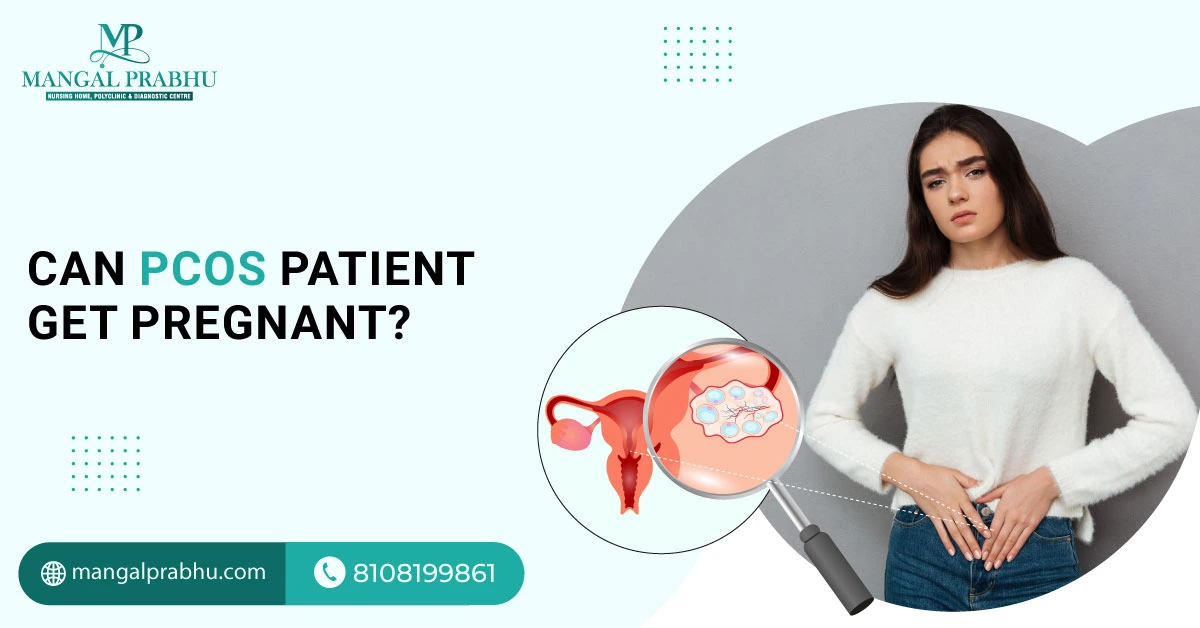
Can a PCOS Patient Get Pregnant?
While women with PCOS might face difficulty getting pregnant, it’s a treatable condition. With medication and lifestyle changes, you can conceive. Women are advised to get PCOS treatment in Navi Mumbai to improve their chances of pregnancy. Let’s take a detailed look at “Can a PCOS patient get pregnant”? And how PCOS is managed in women planning pregnancy.
Can PCOS Patients Get Pregnant?
Polycystic Ovarian Syndrome (PCOS) is a hormonal condition that disrupts a woman’s ovulation cycle. Normally, your ovaries release an egg every month during your ovulation cycle. In PCOS patients, the follicles do not release a mature egg, resulting in irregular periods. This also happens because of a hormonal imbalance.
PCOS results in increased production of androgens (male hormones) and reduced production of estrogen. This affects your fertility. If your follicles do not produce mature eggs, there’s no chance of fertilization. That said, even with PCOS, some women tend to ovulate. It may not be regularly, but occasionally. All you need to do is use an ovulation tracking kit to find the best time to try.
Treatment Options to Enhance Fertility
Here’s what your doctor may advise you if you are trying to conceive with PCOS:
i) Lifestyle Changes
If your BMI is above 30, focus on losing weight. Eat a nourishing diet and stay active. Losing just 5-10 percent of weight will be enough to restore your normal ovulation cycle. Additionally, mental stress can worsen symptoms. Practice meditation and yoga, and indulge in your hobbies to de-stress your mind.
ii) Medical Treatments
Your gynecologist in Navi Mumbai might recommend medication to stimulate your ovaries to produce and release a mature egg every month. You will be prescribed clomid or metformin (if you have insulin resistance with PCOS). The goal is to correct your disrupted ovulation cycle, which may eventually help you conceive.
iii) Assisted Reproductive Technology
If none of the above treatment options work, your last resort is Assisted Reproductive Technology (ART). It’s a collective name for treatments that involve sperm and egg fertilization outside your body. The most common ones are In Vitro Fertilization (IVF) and Intrauterine Insemination (IUI).
A fertility specialist will prescribe medication to stimulate your ovaries to release eggs. These are collected through a minimally invasive surgical procedure. The retrieved eggs are combined with your partner’s sperm in an embryology lab. The fertilized eggs take 3-5 days to turn into an embryo. The last step is embryo transfer into your uterus. You can take a pregnancy test 10-12 days after implantation.
Tips for Managing PCOS While Trying to Conceive
Here’s what you can do to maximize your chances of natural conception despite PCOS.
- Eat low-glycemic index foods, such as green leafy vegetables and whole grains.
- Maintain a habit of exercising at least 20 minutes a day.
- Indulge in calming activities, like meditation and journaling.
- Use ovulation predictor kits to time your intercourse.
Consult your gynecologist to learn more about conception with this hormonal condition and get practical tips for managing PCOS symptoms.